Wedding dress code wording for every function
Indian formal means nothing to half your guest list. Wording per function, colour names people actually understand, and a polite exit for the guests who cannot comply.
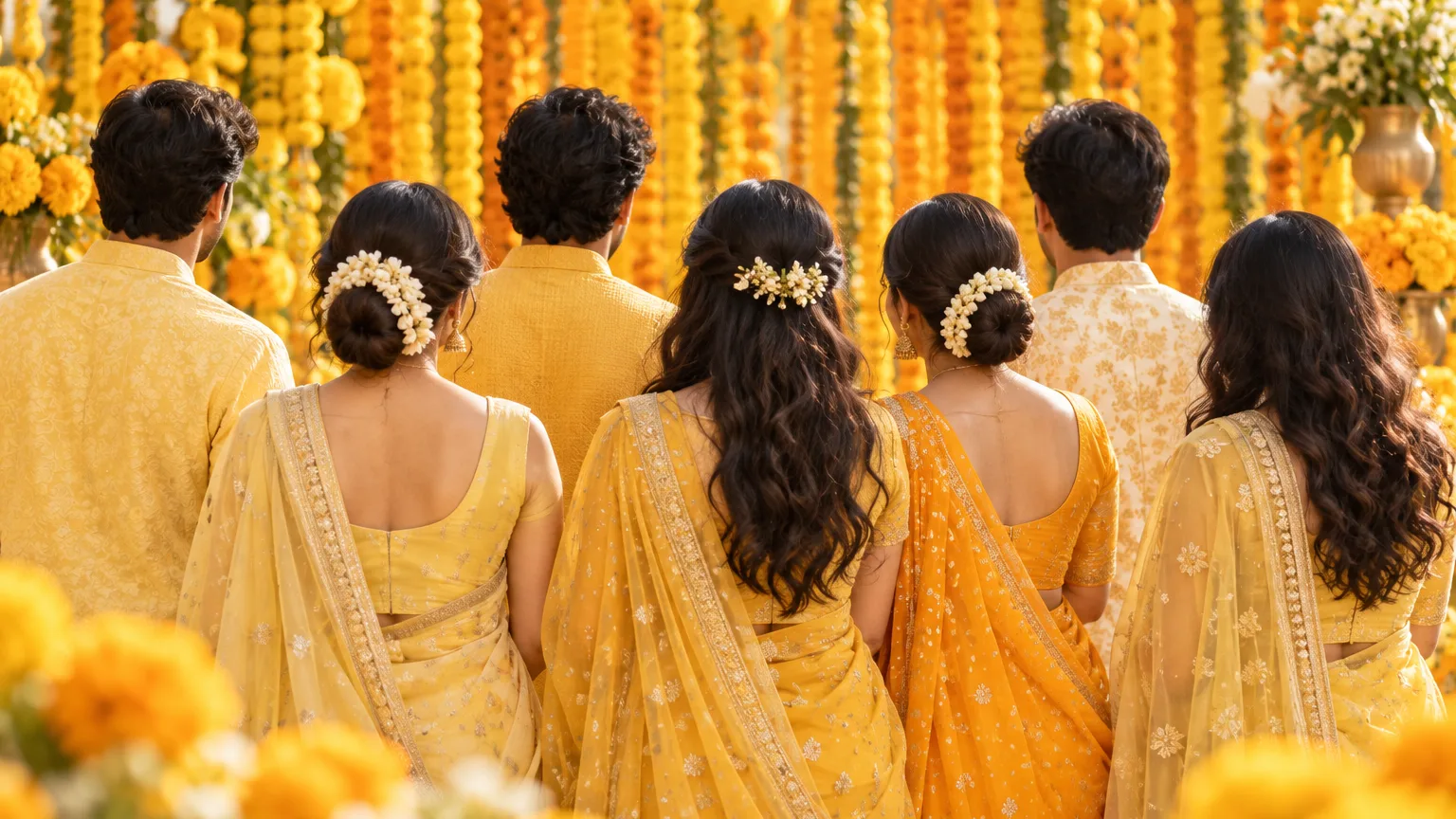
Indian formal. Festive Indian. Traditional attire. Every dress code on an Indian wedding invitation says one of these, and none of them tells a guest anything. A cousin in Bangalore reads Indian formal and thinks silk saree. Your college friend reads it and thinks the kurta he wore to Diwali. Both of them arrive slightly wrong, and both of them spent an hour deciding.
Colour coordinated functions are normal now. The communication around them has not caught up at all, which is why the group chats fill up in the last week with photos of clothes and the question is always the same: is this the right yellow? The line sits on the card alongside the rest of your invitation wording, so it is worth writing as carefully as the host line.
The two ways a dress code fails
It is too vague, or it is too bossy. Vague is the common one. Festive tells a guest nothing they did not already know about a wedding. Elegant is not a colour or a garment. Pastels is closer, but a guest still has to guess whether that means a pastel saree or a pastel suit, and whether the men are included.
Bossy is rarer and worse. Strictly pastels only, no exceptions, entry subject to dress code. People have flown in. Someone is in mourning. Someone's only pastel outfit does not fit any more and they were not going to tell you that. A line like this makes a handful of guests feel unwelcome to save you a small amount of colour variance in photographs, which is a bad trade.
The version that works names the function, the garment, the colours and one practical thing about the venue. Four short pieces. It fits on two lines.
| What most cards say | What actually helps |
|---|---|
| Haldi: festive yellow | Haldi: yellows, and please wear something you do not mind losing. Turmeric does not wash out. |
| Mehendi: green, traditional attire | Mehendi: greens. Sleeves you can push up past the elbow, since one hand will be out of action for a few hours. |
| Sangeet: Indian formal | Sangeet: dress to dance. Lehenga, saree, kurta with a jacket, anything you can move in. Shoes you can stand in until 1am. |
| Wedding: traditional | Wedding: full Indian formal, reds and golds. We are keeping red for the bride, so anything else. The mandap is on grass, so heels will sink. |
| Reception: cocktail | Reception: cocktail or Indo western. Suits, gowns, sarees, whatever you feel best in. Indoors and air conditioned. |
Dress code wording for haldi, mehendi, sangeet and the reception
Lift these and change the colours. Each one is written to sit under the function on the invitation, not as a separate section, because a dress code buried at the bottom of a card gets read after the outfit has already been bought.
Haldi: yellows, marigold, anything sunny. Please wear something you do not mind ruining. Turmeric is permanent, and we intend to be generous with it. Cotton over silk, and leave the good jewellery at home.
Mehendi: greens, from mint to bottle green. Sleeves you can push up past the elbow, please. One hand will be out of action for a few hours, so nothing with fiddly buttons, and carry a dupatta pin rather than fighting with it later.
Sangeet: dress to dance. Deep jewel colours if you feel like matching us, but the only real rule is that you can move in it. The floor opens at 9pm and does not close early. Wear shoes you can stand in until 1am.
Wedding: full Indian formal. Reds, golds and deep pinks. We are keeping red for the bride, so anything else in that family is perfect. The mandap is set on grass, so heels will sink and flats are the smarter choice.
Reception: cocktail or Indo western. Suits, gowns, sarees, sherwanis, whatever you feel best photographed in. Indoors and air conditioned, so a jacket or a shawl is worth carrying.
The practical note at the end of each is the part guests remember. Grass and heels, air conditioning and shawls, turmeric and cotton. It is also the part that makes the colour request read as care rather than as staging, which is most of the difference between a dress code people follow and one they resent.
Asking without ordering
The difference is one word. Please wear yellow is an instruction. We would love a sea of yellow is an invitation to join in. Both get roughly the same result, and only one of them sounds like a wedding.
Our opinion, and it is a strong one: use the firm version exactly once, for the single function where the photograph genuinely matters to you, and use the soft version everywhere else. A guest can be asked to make an effort once. Asked five times, they stop reading.
We would love a sea of yellow at the haldi, but come as you are if that is easier. We just want you there.
This is the one we are asking you to play along with. Mehendi is green, head to toe, and we are taking a family photograph at 5pm before the light goes. Anything green counts.
Notice what the firm version does. It gives a reason. People will go out and buy a green kurta for a photograph at 5pm and will not go out and buy one to satisfy a colour scheme.
The guests who will not or cannot follow it
Every guest list has them. A widowed grandmother who has worn white for eleven years and is not going to start now. An aunt in mourning. A colleague flying in with one suitcase and no room in it for a yellow outfit they will wear once. A pregnant cousin who has three things that fit. A guest for whom a colour carries a meaning in their own community that it does not carry in yours.
Give all of them a written exit, on the invitation, in the same size type as the dress code itself. Not tucked away, and not left to be sorted out by a phone call, because the people most likely to feel awkward are the least likely to make that call.
These are suggestions, not rules. If the colours do not work for you, wear whatever you are comfortable in. Your presence is what we asked for.
Tell the family what the answer is
The men's dress code that nobody writes
Men ignore dress codes because there are none. Look at almost any Indian invitation and the colour line reads as though it were meant for the women, and so the men default to the same dark suit or the same white kurta at every function of the week. Then everybody wonders why the group photographs look uneven.
Fix it by naming the garment. Indian formal is meaningless to a man who owns one kurta and two suits, and completely clear the moment you write kurta pyjama with a Nehru jacket.
| Function | For women | For men |
|---|---|---|
| Haldi | Yellows, cotton, nothing precious | Yellow or white kurta, cotton, sleeves you can roll |
| Mehendi | Greens, sleeves that push up | Green or ivory kurta, jacket optional |
| Sangeet | Lehenga, saree or gown you can dance in | Kurta with a jacket, or a bandhgala |
| Wedding | Traditional, reds and golds, flats for grass | Sherwani, bandhgala or a silk kurta set |
| Reception | Cocktail, saree or gown | Suit, or an Indo western jacket |
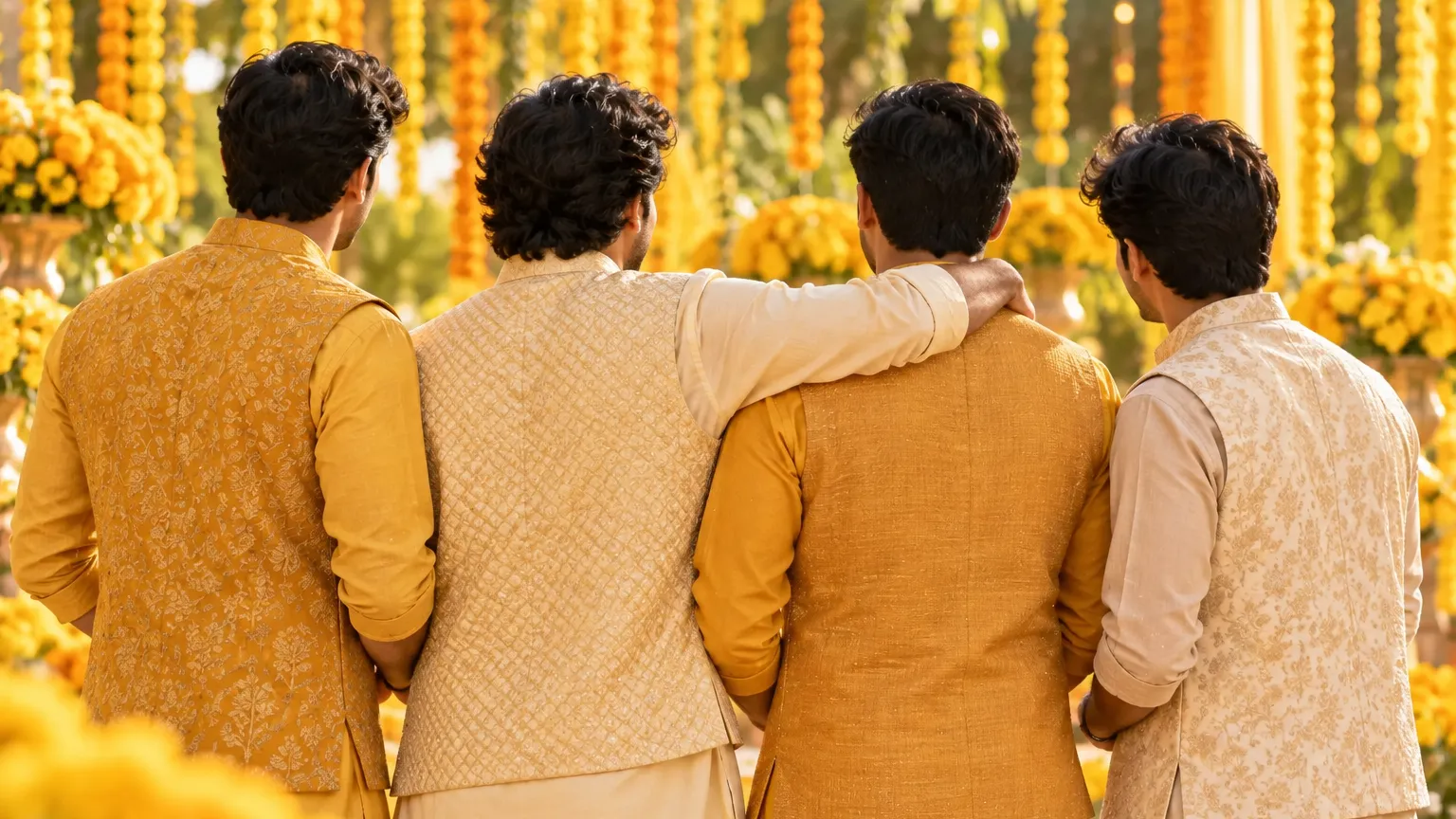
Send the men's line directly to the men. Put it in the invitation, then send it again in the group chat a week before, addressed to them, because a man reading a dress code assumes it is not about him until his name is on it.
Why colour names like mustard do not travel
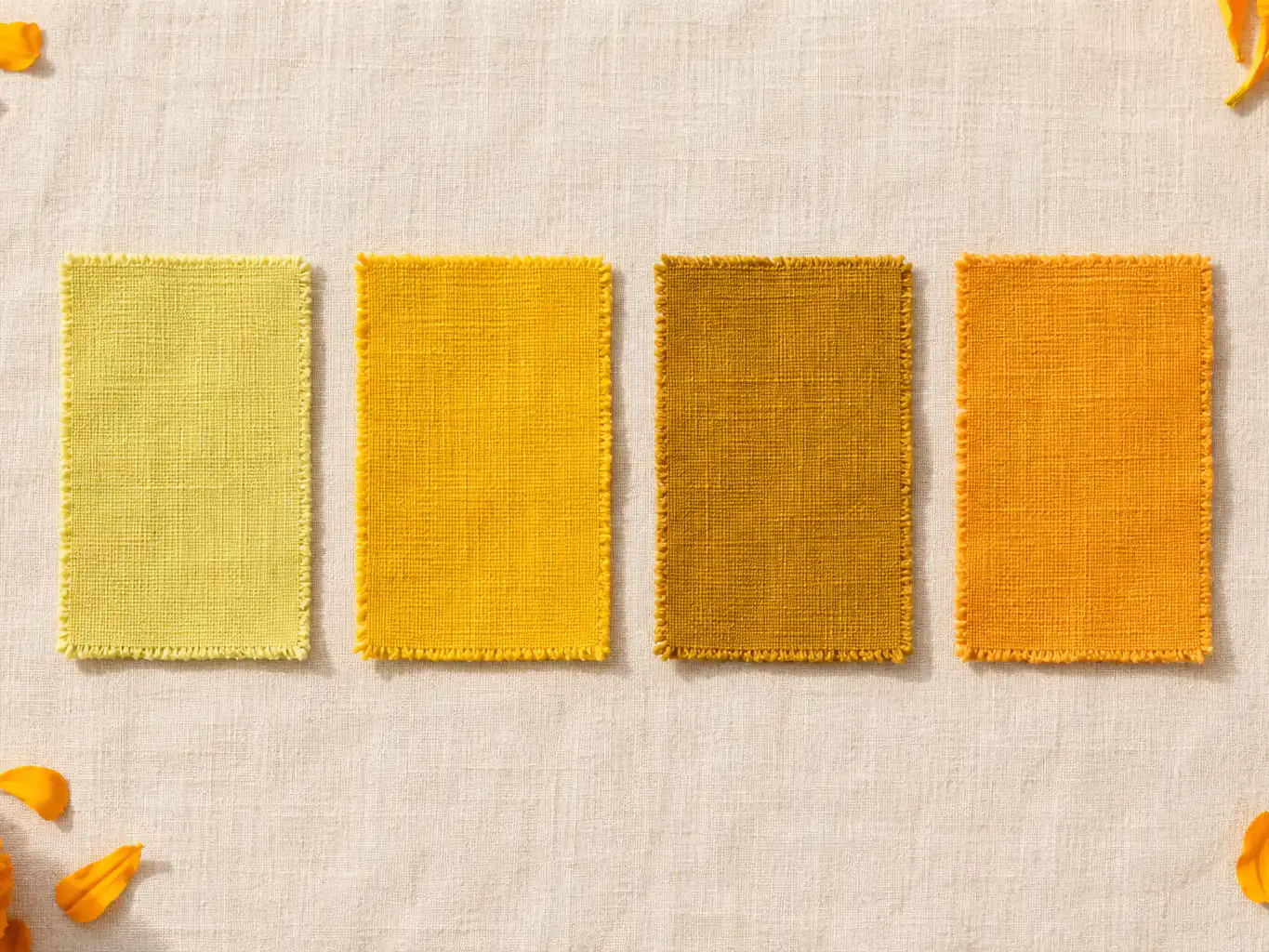
Here is the failure that nothing above solves. You write mustard. Your friend pictures a deep, brownish gold. Your bua pictures the yellow of actual mustard flowers, which is much brighter. Your cousin buys something in between and is annoyed with all of you. The word was never the same word.
Colour names do not transfer. Rani pink, gerua, firozi, mehendi green, haldi yellow, bottle green, onion pink, sea green: half the country uses each of these differently, and English colour words are worse, not better. Anything that depends on a shared vocabulary of shades will fail somewhere on a list of 300 people.
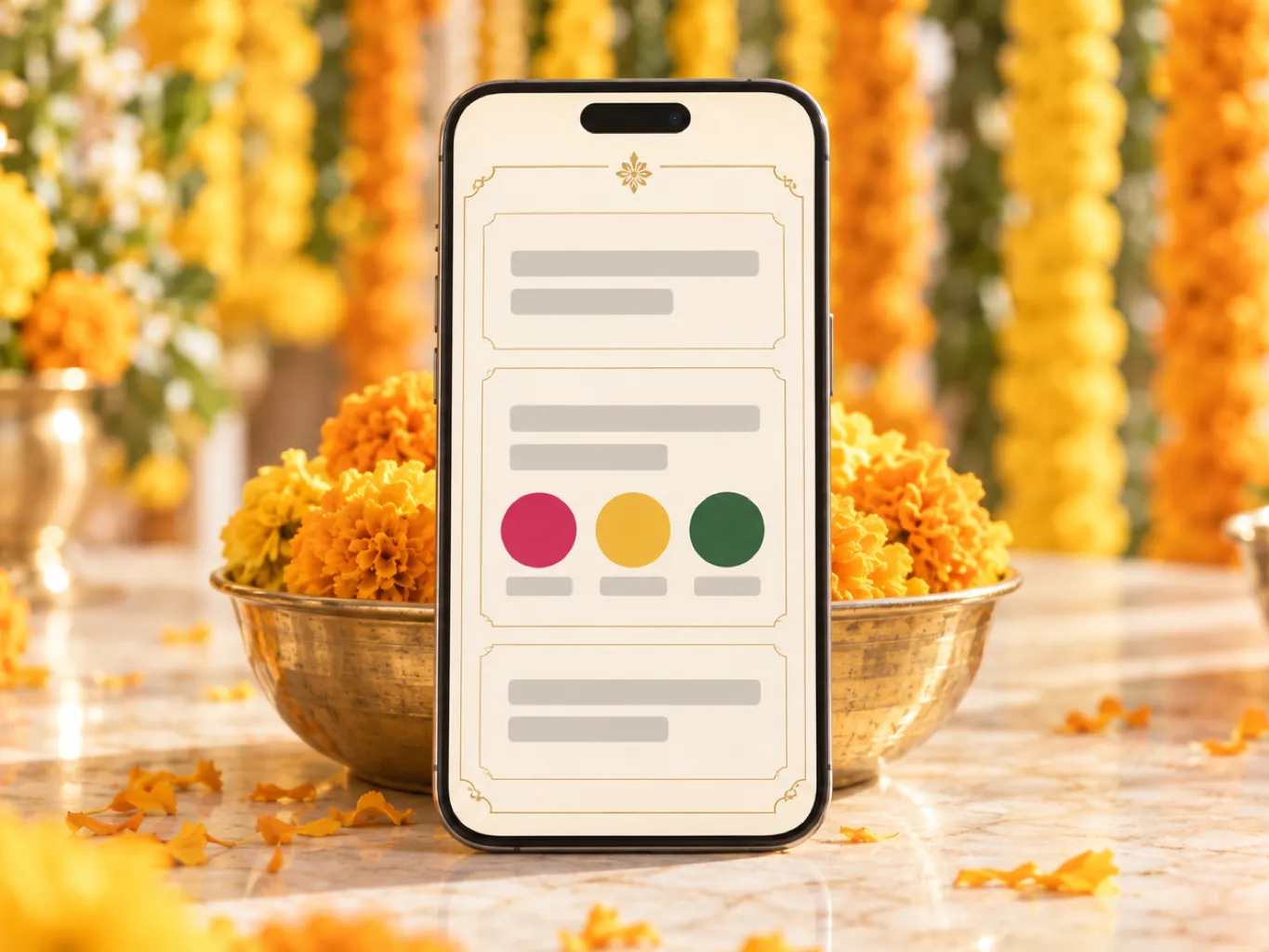
The only reliable fix is to show the colour. On Shagun Studio, each function carries up to four colours, picked from a palette of 26 swatches or mixed exactly with a colour picker, and they render as dots under that function on your invitation. A guest sees the shade rather than reading a word for it.
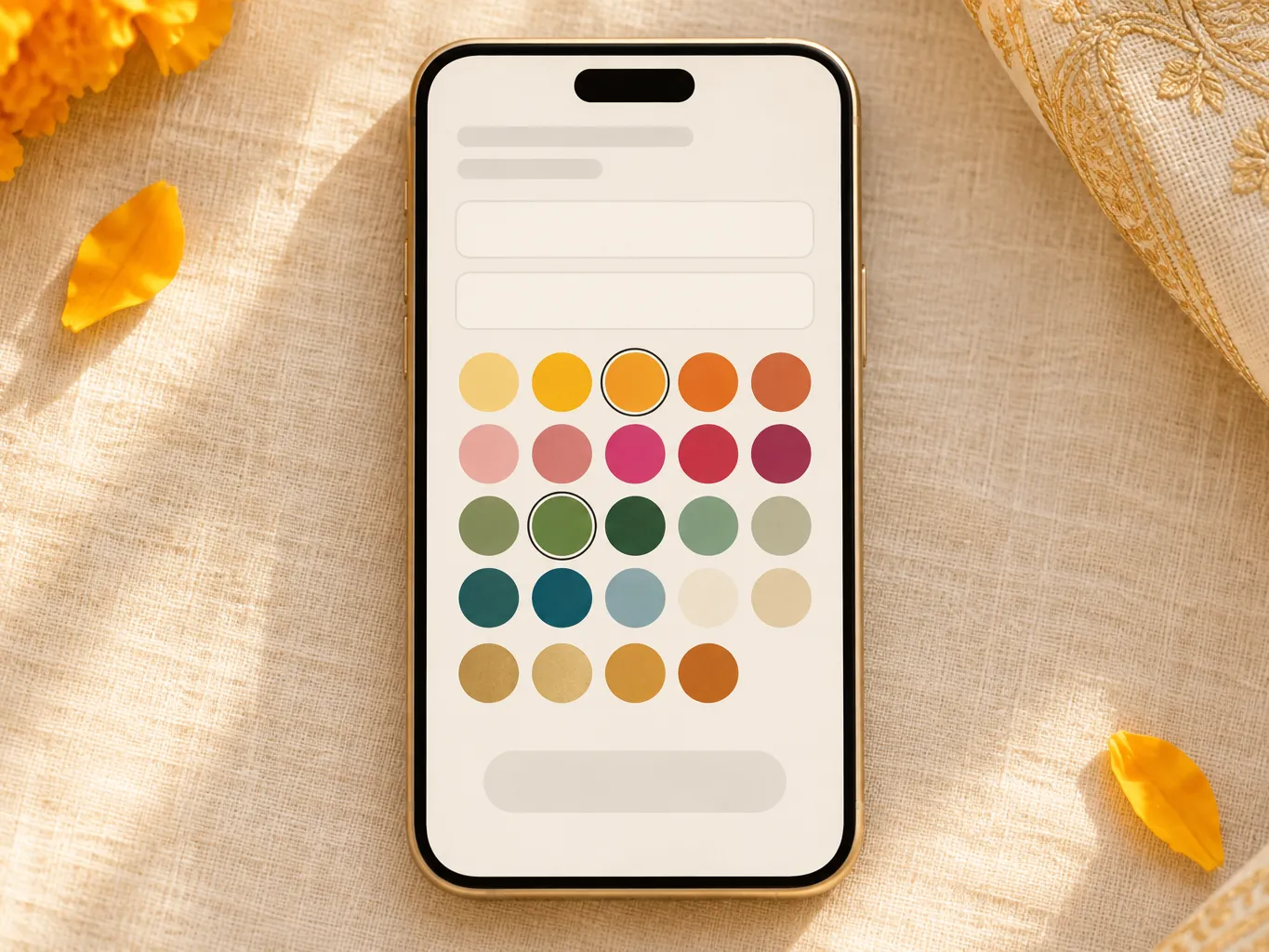
The second half matters as much. You name each colour yourself, in your own words, in any language. Not the name we chose. So the swatch reads haldi yellow, or गहरा गुलाबी, or Ammu's favourite green, or the green of the mehendi cones, and the dot beside it settles what that actually looks like. Both halves together are what stops the group chat conversation before it starts.
Two or three colours, not one
Where the dress code goes
Under the function it belongs to, and nowhere else. A dress code section at the bottom of an invitation makes guests scroll back and forth matching lines to functions, and the ones who do not bother end up wearing the sangeet colours to the mehendi.
Keep a short version on the printed card, since cards run out of room, and put the full wording on the website where there is space for the practical notes, next to everything else a guest needs. If you have a guest information section, a dress code card there is worth having as well, for the guest who remembers there was something about shoes and cannot find it again.
When the functions have partly different guest lists, write the dress code per function against the list for that function, so the aunt invited only to the reception is not reading about turmeric.
And send it once more, in the group chat, three days before the first function, in the same message as the nudge for the people who still have not replied. Not two weeks, when nobody has packed. Three days, when everybody is standing in front of an open cupboard.
Questions people ask
Can we ask guests not to wear red to the wedding?
You can, and plenty of families do, because red is the bride's colour at most Hindu weddings. Word it as a preference rather than a ban: we would love to keep red for the bride, so anything else is perfect. Some families do not mind at all, so check with your own elders before you put it on the card.
What happens if someone turns up in the wrong colour?
Nothing. That is the correct answer and the only one worth planning for. A dress code is a suggestion that helps most people look good together in photographs, and treating it as enforceable turns a wedding into a school assembly.
Is it rude to put a dress code on an Indian wedding invitation?
No. It is a relief. Guests spend more time worrying about what to wear than about anything else you will put on the card, and a clear line saves them a phone call to your mother.
How many colours should we pick per function?
Two or three. One colour makes a room look like a uniform and leaves guests who own nothing in that shade with no option. More than four stops being a palette and starts being a permission slip. Shagun Studio caps it at four per function for exactly this reason.
What should the dress code say for men?
Name the garment, not the mood. Kurta pyjama with a jacket, or a bandhgala, or a sherwani, or a suit. Men ignore dress codes mostly because nobody has ever written one for them, so they default to the same navy suit at every function and look wrong in half the photographs.
Do we need a dress code for the haldi if everything gets ruined anyway?
That is the dress code. Tell guests to wear yellow they do not care about, because turmeric does not come out. The warning matters more than the colour, and it is the single line guests thank you for afterwards.
Ready to send yours?
Pick a design, add your names and your events, and share the link. Building is free. You pay once, when you publish.
Browse the designs